
Dismissal without a framework
In Benin, the dismissal of 169 workers from public broadcasting is not merely an internal labour dispute. It raises a harder question: how is a public institution restructured, under what safeguards, and who controls the procedure when the state itself stands behind the employer?
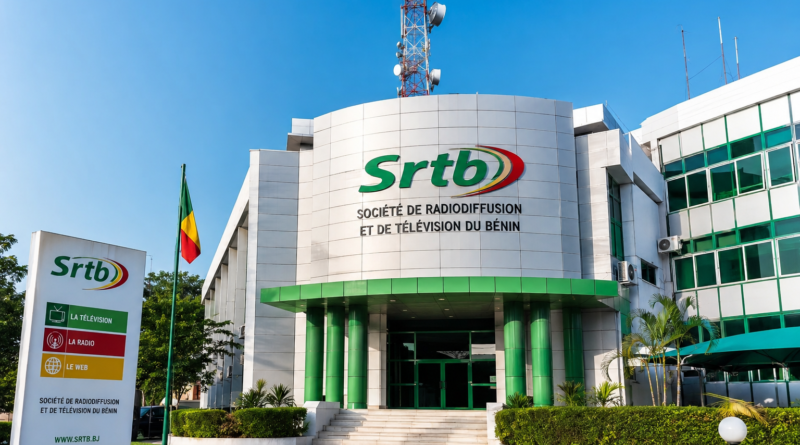
According to RFI Afrique on 18 May 2026, 169 workers of the Société de Radio et Télévision du Bénin were dismissed on 13 May. The case is presented as part of the modernisation of the SRTB, the public broadcasting structure that followed the former ORTB framework. A skills audit reportedly accompanied this restructuring, with a social component. Unions, however, contest the way the process was conducted: they describe it as rushed, insufficiently negotiated and opaque in its criteria.
That is where the real issue begins. A collective dismissal is never a simple management act, still less in a public service institution. It involves criteria, procedure, rights, remedies, administrative responsibility and political responsibility. The number, 169, is shocking because it condenses lives, wages and families. But legally and politically, the central question lies elsewhere: who decided, on what criteria, after what consultation, with what guarantees, and under what form of review?
Modernisation does not erase procedure
The word modernisation is convenient. It gives harsh decisions a technical appearance. It suggests that the old must give way, that staffing must be adjusted, that skills must be assessed and that public service must become more efficient. None of this is illegitimate in itself. A public broadcaster may need reform, training, digital adaptation and clearer missions.
But a reform is not legitimate simply because it calls itself modern. Its legitimacy depends on proof, rules and guarantees. When unions say a consultation framework had been discussed but did not operate as expected, the issue becomes procedural. The dispute is not only about the final outcome. It is about the path that led to it.
In such cases, procedure is not a bureaucratic detail. It is the minimum protection against arbitrariness. It forces reasons to be stated, criteria to be made contestable, worker representatives to be heard and those affected to understand what is happening to them. Procedure does not remove the social pain of dismissal. It prevents that pain from being produced as a fait accompli.
According to the available reports, the dismissals affected several areas of the organisation: radio and television broadcasting, human resources, finance and communications. Unions are asking in particular for the rapid payment of legal entitlements and for a counter-audit. This demand says something essential: when an audit becomes the basis for a mass dismissal, it cannot remain a black box. Its criteria must be known, challengeable and verifiable.
Public broadcasting is not an ordinary company
The SRTB is not just an employer. It is a public media institution, tied to information, public service and the state’s presence in the public sphere. That changes the nature of the debate. In an ordinary company, a social plan already raises questions of law, dignity and protection. In a public broadcaster, it also tests the state’s ability to treat its own workers according to the principles it claims to uphold.
A modernised but socially brutalised public broadcaster sends a contradictory signal. It can promise new channels, new branding, new programming and better efficiency. But if the transformation rests on workers pushed out under contested conditions, modernity becomes a cover. It no longer means improved service to the public. It means vertical ordering of an institution.
Caution is necessary: at this stage, all the documents are not public. The audit, administrative decisions, management’s full position, the exact role of the labour authorities, the legal status of the affected workers and the payment of rights must be verified. Without these elements, no definitive legal judgment can be made on the dismissals.
But the political fracture is already visible. The unions are not asking only for sympathy. They are asking for a framework, oversight and rights. They are reminding the public that a worker is not a silent adjustment variable. Behind every deleted post there is an income, a family, a professional path and social dignity.
When the state reforms, it judges itself
The Beninese case goes beyond the SRTB. It speaks to a broader trend across public institutions: the state restructures public services through the language of performance, audits, rationalisation and institutional communication. These words can produce improvement. They can also mask social reduction without democratic debate.
A skills audit is a dangerous tool when it becomes a sentence without adversarial review. It can help train, redeploy and support. It can also select, exclude and humiliate. Everything depends on its use, transparency and the safeguards offered to those assessed. When workers say they were not properly heard, suspicion cannot be dismissed by the vocabulary of modernisation.
What is at stake here is not only the fate of 169 workers. It is the way a state-backed employer handles social conflict in an institution it controls. If it reforms without listening, reform becomes discipline. If it dismisses without clearly explaining, the audit becomes opaque power. If it reduces justice to the payment of legal entitlements after the event, social justice becomes an exit indemnity.
Public service does not need immobility. It needs institutions able to change without crushing those who make them work. In Benin, the SRTB may become a test case. Either management, labour authorities and the state make the procedure clear, reviewable and documented, or the dismissal will remain the mark of a modernisation imposed from above.
Procedure is not the enemy of reform. It is what prevents reform from becoming an act of force.
Yamina Boudiaf
Sources used
Press:
- RFI Afrique, « Bénin : le licenciement de 169 personnes dans l’audiovisuel public crée la polémique », 18 mai 2026.
Institutional sources:
- Présentation publique de la Société de Radio et Télévision du Bénin, consultée pour le contexte institutionnel.