Succès Masra: imprisonment as political suspension
In Chad, the Succès Masra file is not only about the fate of a former prime minister turned opponent. It exposes a deeper mechanism: when justice intervenes in a locked political field, every procedural act also weighs as an act of power.
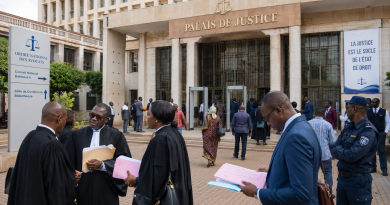
The file must first be approached as a judicial matter. Charges, evidence, sentence, appeal, detention conditions and defense arguments have to be treated separately. Journalism cannot replace a court, and an opposition status does not automatically invalidate proceedings. But in a political system marked by concentration of authority, the legal file cannot be abstracted from the balance of power around it.
Succès Masra's trajectory makes this separation impossible to maintain neatly. Formerly integrated into the state apparatus, then repositioned as an opposition figure, he embodies the fragility of political incorporation in systems where opening and closure can follow each other quickly. A politician may be received, appointed, tolerated, then judicially neutralized. The institution changes language; the effect can remain the same: the field of opposition is narrowed.
Procedure in a closed political field
The central question is not whether the judiciary should be prohibited from touching political figures. That would be absurd. The question is whether the procedure offers enough guarantees to prevent justice from becoming an extension of political management.
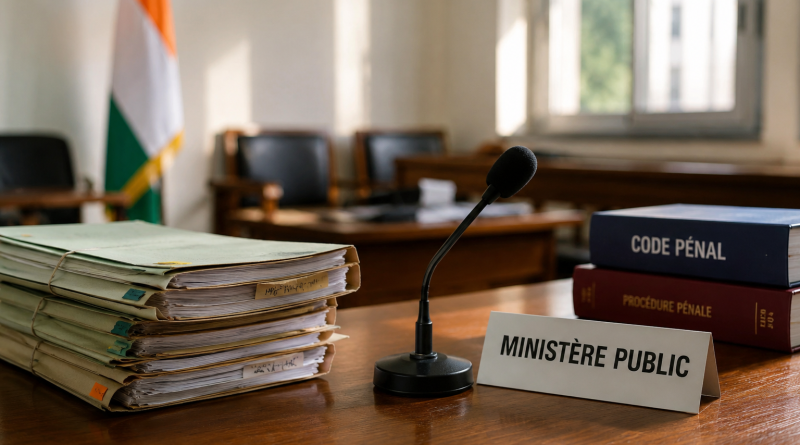
Those guarantees are concrete: clarity of charges, public access to essential procedural information, independent judges, effective defense, reasonable deadlines, the possibility of appeal, and the absence of pressure on lawyers, witnesses or media. Without them, procedure loses its function of truth-seeking and becomes a form of suspension.
Suspension is not the same as elimination. It is often more effective. A detained or judicially burdened opponent remains present in the public conversation, but his capacity to act is reduced. His supporters are pushed into defense campaigns. His organization loses time and initiative. The political agenda shifts from program to survival.
The state and the grammar of order
Chadian politics has long been structured by the grammar of order: stability, security, transition, national cohesion. These words are not empty. Chad is marked by armed conflict, regional pressure and fragile institutions. But precisely because the stakes are high, the use of justice against political actors requires greater guarantees, not fewer.
When the state presents political conflict as a threat to order, judicial action acquires a double meaning. It claims to enforce the law, but it also signals the perimeter of tolerated opposition. The line between accountability and containment becomes difficult to read.
This ambiguity is the heart of the Masra file. If the case is legally solid, the authorities should have an interest in making the procedure legible. If it remains opaque, delayed or politically framed, the judiciary risks carrying the burden of a decision that belongs to power.
A test of institutions
The case therefore tests more than one man's fate. It tests the ability of the Chadian judicial system to handle a politically sensitive file without becoming part of the political battlefield. It tests whether opposition can exist without being permanently exposed to penal risk. It tests whether public order can be invoked without dissolving public freedoms.
A legal reading must remain cold. It must not turn a defendant into a symbol so quickly that the file disappears. But it must also refuse the opposite trap: treating a politically charged proceeding as a mere technical matter. The law does not float above society. It is applied through institutions, interests and pressures.
Before publication, the file needs strict verification: exact charges, sentence, procedural stage, lawyers' position, appeal and current detention status. Only then can the article move from warning to final analysis.
For now, the political meaning is already visible. In a closed system, imprisonment does not only punish. It interrupts. It freezes a trajectory, disorganizes a camp and reminds everyone that participation in politics remains conditional. That is why the question is not only whether Succès Masra is guilty or innocent. It is whether justice can still be recognized as justice when it functions inside a field already organized by the executive power.
Sources used
- Press: Associated Press, contextual reporting.
- Press: RFI, initial archive source to be recovered.
- To verify: Verify the full judicial decision, exact charges, sentence and fine..
- To verify: Check the lawyers' position, appeal avenues and current detention status..