DRC: registering artists to administer living memory
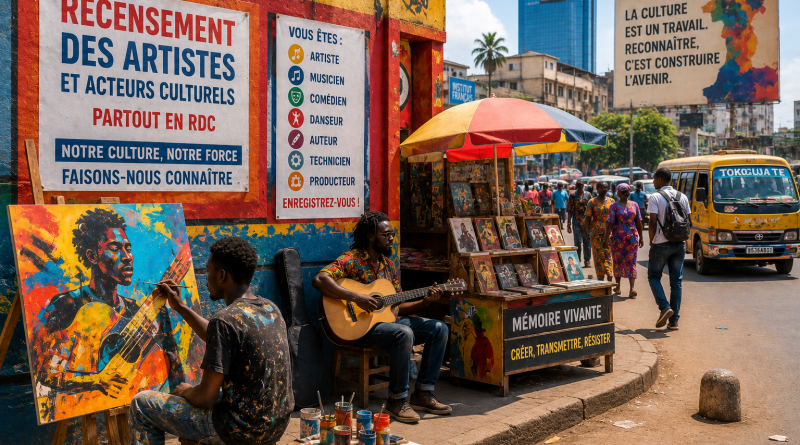
Counting artists is never only a technical exercise. A census promises recognition: names, numbers, professional status, access to support, perhaps rights. But it also raises another question: what happens when living culture is placed under the gaze of administration?
Counting is not yet recognising
In the DRC, a reported initiative to register artists points to a real need. Many creators live from unstable work, informal networks and fragile visibility. To be counted can mean no longer being treated as decorative labour. It can give cultural workers a place in policy, budgets and institutions.
But recognition is not automatic. A register can also become a filter. It can decide who is legitimate, who is invisible, who is too local, too independent or too politically inconvenient to fit the official category of artist.
Living memory does not fit easily into a box
Congolese culture is not a museum shelf. It is music, theatre, street performance, language, memory, mourning, humour and popular invention. It carries histories that the state did not always protect and that official archives did not always keep.
To administer culture is therefore to touch memory. The risk is to reduce creators to files while forgetting the worlds they hold together.
From inventory to public policy
A useful census would have to lead to rights, not only statistics: social protection, copyright enforcement, training, access to spaces, transparent support and protection against arbitrary exclusion. Otherwise, the register will remain a bureaucratic mirror.
The real issue is simple: an artist is not only a name in a database. An artist is also a witness, a worker and a carrier of memory. Counting them is meaningful only if it helps them remain free to create.
Sources used
- RFI source from the LMA archive, to be verified.
- DRC Ministry of Culture announcement to be verified.