Libya: Moscow, Ankara and military diplomacy
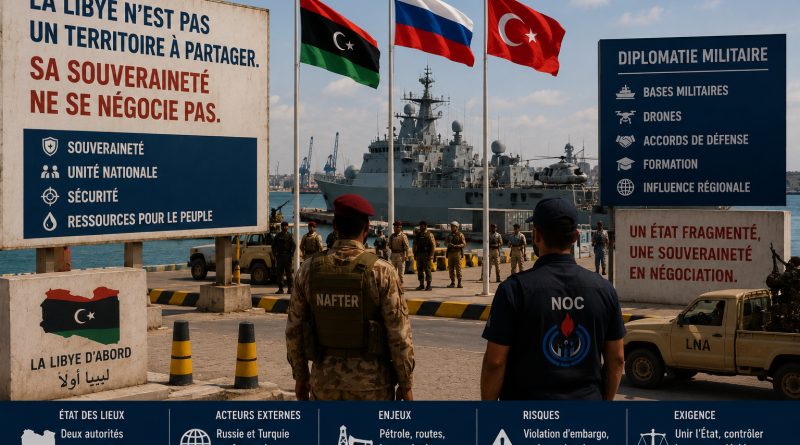
Libya’s diplomacy is often written in the language of reconciliation. Its real balance is still written in the language of force. The country’s institutional reunification remains fragile because armed influence, foreign backing and regional competition have not disappeared. They have become more discreet, more technical and more entrenched.
Sovereignty fragmented by arms
A state can have ministries, meetings and official roadmaps while its sovereignty remains divided. In Libya, military networks, foreign training, drones, advisers and local armed coalitions continue to structure political possibilities. What is called stabilisation often means freezing a balance rather than rebuilding a common authority.
Ankara no longer stops at Tripoli
Turkey’s role is not simply an old intervention in defence of the Tripoli government. It has become a durable military-diplomatic presence. Training, equipment and security cooperation give Ankara leverage in a country that sits between the Mediterranean, the Sahel and energy routes.
Moscow seeks depth, not only a base
Russia’s Libyan interest also exceeds the image of one military foothold. Libya offers access, pressure, influence over migration and energy corridors, and a position in North Africa after the reconfiguration of Russian influence in the Sahel. Moscow looks for depth: logistical, political and symbolic.
The embargo as a sign of impotence
The UN arms embargo has long revealed the limits of international discipline. Weapons, drones and advisers do not arrive in a vacuum. They arrive because external actors calculate that enforcement will remain partial and because Libyan fragmentation creates demand.
The trap is clear: Libya can be declared institutionally reunified while remaining militarily outsourced. In that case, sovereignty returns in speeches, but not in command.
Sources used
- Reuters, April 2, 2026.
- Associated Press, December 23, 2025.
- The Guardian, December 20, 2024.
- UN documentation on the arms embargo to be verified before publication.