Oil under contract
Niger and China are moving forward with new oil protocols. Presented as strategic agreements, the protocols announced by Niger’s ANP on 18 May 2026 belong to a longer story: Agadem, CNPC, the Zinder refinery, the export pipeline to Benin, tensions around coastal access and Niger’s search for a stable route to the Atlantic.
This is not only an energy issue. It is a sovereignty issue for a landlocked state whose oil has value only if it can be financed, transported, sold and, ideally, partly transformed at home.
At first glance, cooperation with Beijing seems to offer what many Sahelian states have long sought: capital, engineering, technical capacity and a partner less inclined than Western powers to speak the language of political conditionality. But that reading is incomplete. Infrastructure never comes without political weight. Whoever finances, operates, opens markets or advances money also holds part of the real decision-making power.
The oil of a landlocked state
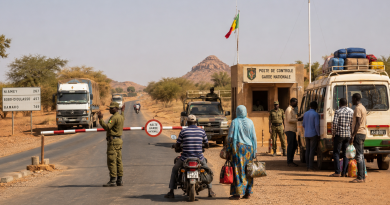
Geography is unforgiving. Niger may produce crude, but it has no coastline. Its oil must cross other territories before reaching global markets. The Niger-Benin pipeline was designed to solve that constraint by linking Agadem to the Atlantic coast. Yet the same infrastructure has exposed a new dependency: maritime access passes through Benin, and therefore through a bilateral political relationship, transit rules, a terminal and a long exposed pipeline.
The 2024 tensions between Niamey and Cotonou showed the scale of the problem. Reuters reported that Benin provisionally reversed a ban affecting Nigerien oil exports, then later reported that Niger halted exports to China through the pipeline amid a dispute with Benin. These were not minor technical incidents. They exposed the basic truth of landlocked states: energy sovereignty is often decided outside national borders.
That is why a protocol signed with Beijing is not enough. The serious questions are concrete. Who controls the flow? Who sets prices? Who bears risk? Who owns commercial data? Who can stop the route? Oil is not simply a raw material. It is a chain of dependencies.
China as solution and constraint
China is not a newcomer in Niger’s oil sector. CNPC has played a central role in fields, refining, pipelines, financing and markets. For Niamey, that presence offers a clear opportunity: turning a difficult resource into fiscal and diplomatic leverage.
But the same presence also creates limits. When one foreign partner concentrates financing, technology, operations, market access and sometimes advance payments, national bargaining power narrows. This is not a moral accusation against China. It is a material rule of political economy. The more a state needs one partner to produce and sell, the weaker its opening position becomes.
The problem is not the nationality of the partner. It may be Chinese, Western, Russian, Turkish or Gulf-based. The problem lies in the relationship between infrastructure and sovereignty. A pipeline, a port, a refinery or a road is never neutral. These are places where power becomes material.
Sovereignty does not travel by pipeline alone
The Nigerien sequence belongs to a wider Sahelian reconfiguration. Since the rupture with older regional frameworks and the rise of the Alliance of Sahel States, landlocked states have been searching for new routes, allies and outlets. Nigerien oil is part of that movement. It intersects with the Benin corridor, Atlantic access, budget needs and the wish to assert sovereignty beyond inherited regional constraints.
But declared sovereignty does not replace organized sovereignty. The proof lies in contracts, net revenues, local refining, skills transfer, tax control, environmental safeguards, pipeline security and the ability not to depend on a single corridor or financier.
If the 2026 protocols expand Niger’s bargaining power, diversify its outlets and increase local transformation, they may become instruments of sovereignty. If they merely extend a model in which the state trades access to its resource for infrastructure, an advance and a captive market, they will only shift dependency into a new form.
Nigerien oil therefore raises a question larger than Niger itself. In the Sahel, real independence is no longer measured only by flags, borders or declarations of rupture. It is measured by corridors, contracts and infrastructure. Whoever owns the underground resource is sovereign only if he also controls the road from the well to the port.
Mourad Ighil
Sources used
Press:
- Reuters, “Niger and China sign crude oil MOU worth $400 mln, says Niger state TV”, 13 April 2024.
- Reuters, “Benin provisionally reverses ban on oil exports from Niger”, 15 May 2024.
- Reuters, “Niger halts oil pipeline exports to China over Benin spat”, 14 June 2024.
Initial source:
- ANP Niger, 18 May 2026, announcement of Niger-China strategic petroleum cooperation protocols, LMA archive.