Procedure as a truce
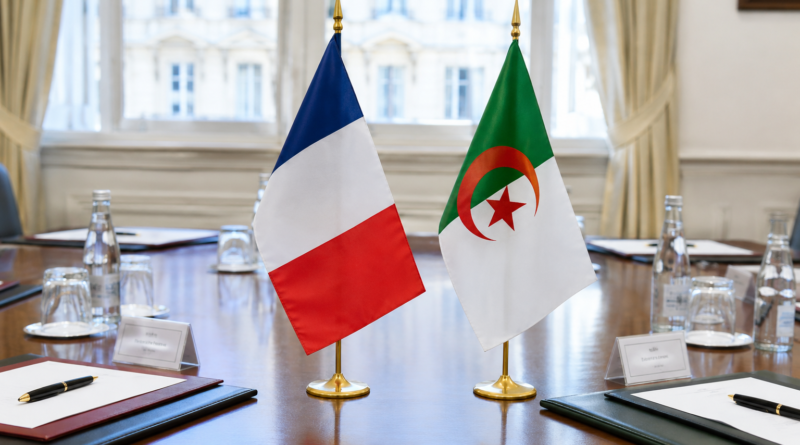
The announcement of Saïd Sayoud’s forthcoming visit to Paris confirms a method: Algiers and Paris are not reconciling, they are restarting technical channels that have become indispensable. Justice, security and mutual assistance are becoming the provisional language of a politically damaged relationship.
According to El Watan, Laurent Nuñez stated in an interview published by La Tribune Dimanche on 17 May 2026 that his Algerian counterpart Saïd Sayoud was expected in Paris in the following days. The announcement follows the French interior minister’s February visit to Algiers and a broader resumption of contacts between the two capitals. The official vocabulary is cooperation, security, migration, intelligence and judicial assistance. It should be taken seriously, not because it announces political peace, but because it says the opposite: when diplomacy can no longer produce trust, it retreats into procedure.
France and Algeria are emerging from a period of deep tension. Western Sahara, migration, reciprocal diplomatic expulsions, judicial and consular cases and colonial memory have pushed the bilateral relationship into a hard zone. That context has not disappeared. It has only been contained. Renewed contact does not erase disagreements or accumulated humiliations. It means that two state apparatuses have acknowledged a basic fact: total rupture costs more than maintaining a controlled channel.
Justice as the ground of recovery
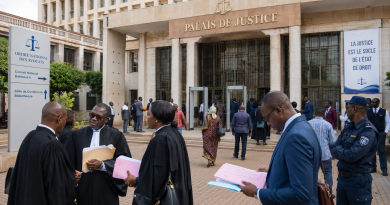
The important fact is not only Sayoud’s expected visit. It is the nature of the files brought back to the center. Security cooperation does not stand alone. It calls for judicial cooperation: information sharing, mutual assistance in criminal matters, organized crime, financial circuits, execution of requests, handling of sensitive cases. In a normal relationship, these tools are administrative machinery. In a degraded French-Algerian relationship, they become political signals.
This is where caution is essential. Judicial assistance is not a slogan. It requires formal requests, competent authorities, procedural rules, time frames, guarantees and limits. It should not be confused with ministerial communication. Nor should it become a political market where each case serves as a bargaining chip. Law is not neutral when it circulates between two states in latent conflict. It can protect and unlock, but it can also cover diplomatic transactions under clean procedural forms.
The expected or discussed presence of French judicial actors around the Darmanin-Boudjemaâ sequence gives a clear indication: Paris is not merely seeking a symbolic dialogue with Algiers. It is trying to give legal structure to cooperation on heavy matters: terrorism, drug trafficking, organized crime, migration flows, money and transnational cases. In other words, normalization is passing through the apparatuses that monitor, prosecute, expel, investigate and transmit.
It would be naive to see this as mere technicality. When interior and justice ministries become the two entry points for recovery, the bilateral relationship changes register. It moves from grand diplomatic narrative to the government of files. That shift can produce concrete results. It can also reduce politics to a sum of security procedures.
What the truce reveals
The recent French-Algerian crisis showed one thing: the relationship is too dense to be broken, but too loaded to be easily pacified. Millions of people live inside this in-between through family, papers, studies, work, visas, inheritance, disputes and memories. States can raise their voices. Societies remain caught in the material continuity of the relationship.
That is why the current recovery is not an act of generosity. It is a calculation of state. France needs Algeria on security, intelligence, expulsions and criminal networks. Algeria needs to preserve leverage, recognition and the handling of its own demands, including those related to assets, archives, judicial files and symbols of sovereignty. Each side returns to the table with interests, wounds and red lines.
Colonial memory weighs on this machinery even when unnamed. Algerian demands for restitution, archives, human remains, nuclear test maps, assets or historical responsibilities are not ideological ornaments. They are objects of law, evidence and sovereignty. When memory enters procedure, it ceases to be merely discourse. It becomes inventory, access to documents, classification, preservation and restitution. Procedure does not solve everything, but it forces actors to leave vague formulas behind.
The risk is clear: that this recovery be presented as appeasement when, for now, it is only a functional truce. A truce can be useful. It can reopen channels, prevent absurd gestures, protect immediate human interests and unblock consular or judicial files. But it becomes dangerous if it is used to whitewash the political crisis. Cooperation does not prove trust. It only proves that interdependence survives rupture.
Law under diplomatic pressure
Yamina Boudiaf
Sources used
Press:
- El Watan, « Rapprochement franco-algérien sur fond de relance diplomatique et judiciaire : Nuñez annonce la visite imminente de Sayoud à Paris », 18 mai 2026.
- Le Monde, « French interior minister eases tensions with Algeria by reviving security cooperation », 18 février 2026.
- Le Monde, « After signs from Macron, Algeria shows its own willingness to resume dialogue », 12 mai 2026.
- Associated Press, « Algeria votes to declare French colonization a crime and demands restitution », décembre 2025.