Fertilizers: Moroccan phosphate power facing its invisible dependency
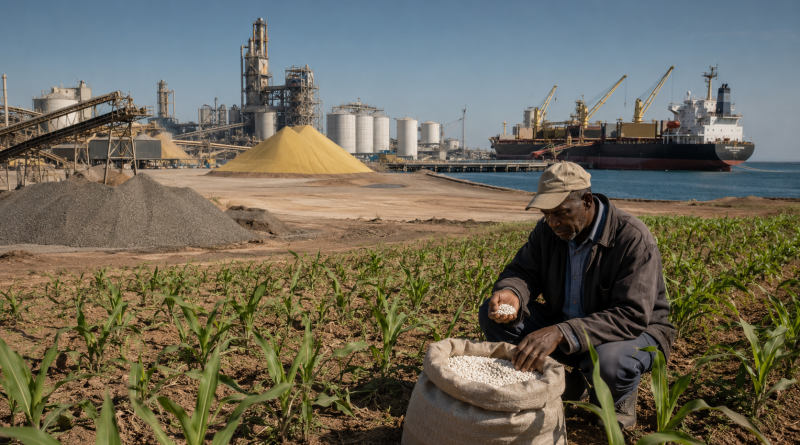
Morocco, through OCP, holds a major lever over phosphate fertilizers. But the sulphur crisis and tensions around the Strait of Hormuz recall a basic reality: producing in Africa does not mean controlling the whole chain.
The fact and what it reveals
The immediate event must be read beyond its surface. It is not only a news item, an institutional statement or a media episode. It reveals a structural tension: the distance between official language and material capacity, between sovereignty and dependency, between public emotion and institutional response.
The facts used here are attributed to public sources and must be checked again before publication if a new communiqué, judicial decision or official update appears. The point is not to amplify the initial source, but to rewrite it within a broader political reading.
The underlying balance of power
In each case, the central issue is not simply what happened. It is who has the capacity to decide, finance, protect, organize or regulate. That capacity is uneven. States speak the language of sovereignty, but they remain constrained by budgets, security needs, external partners, social pressure and market prices.
This is why the subject matters. A forum, a decree, a demographic figure, a debt table, a megaproject or a viral video are not isolated events. They are symptoms. They show how institutions respond when reality becomes harder than the narrative built around it.
Political meaning
The political question is therefore practical: can public authority produce durable effects, or does it only manage appearances? Can it protect the vulnerable, secure territory, organize work, finance development, or regulate capital? The answer depends less on speeches than on implementation.
A serious reading must avoid two traps: moral outrage without structure, and technocratic description without conflict. The facts matter because they expose the machinery behind them. That machinery is where power, social cost and dependency are distributed.
The lesson is clear: sovereignty is not declared. It is built through institutions, production, law, protection and the ability to act before the next crisis forces action.
Yaqoub Mellali
Sources used
- FAO, alerte sur les risques alimentaires liés à Ormuz.
- Argus Media, données sur engrais et OCP, 2026.
- RFI Afrique, 29 mai 2026.